|
 |
||
|
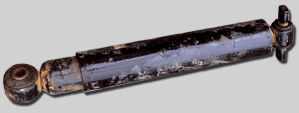
Shock absorbers need not be leaking to be worn out or weak. If fact, many people drive on worn or weak shocks without realizing it. While worn shocks will usually not stop you from traveling, they will reduce your chances of avoiding an accident. And the worse a car or truck handles, the more tiring it is to drive. Mileage alone is a poor indicator or poor shocks. Some shocks do not work well when they are brand new! Other shocks are still working reasonable well at over 40,000 miles. And if you purchase really good shocks you might get over 100,000 miles from a set. The best way to evaluate your shocks is to drive your car or truck over roads you are familiar with. Those roads should require cornering, braking and have a variety of rough and smooth surfaces. Don’t rely on a mechanic or technician to tell you when your shocks are bad. Generally they will not take the time or drive your vehicle far enough to be able to evaluate your shocks properly. The accompanying list will give you guidelines for evaluating your shocks.
|
|
Characteristics of worn or weak shocks: • Excessive rebound or “float” • Wander or poor tracking • Poor steering response • Too much body wallow or lean during lane change or cornering • Corner to corner pitch (corkscrewing motion) during cornering • Excessive dive under braking • Instability during braking • Excessive brake lock-up • ABS engages too quickly and too often • Poor adhesion on rough surfaces (i.e. crossing; railroad tracks) • Frequent bottoming • Harsh ride quality |
|
HOME | CARS | TRUCKS / SUVS |